
Note: This blog post reflects the current state of Viber as of October 2024. Any future updates or improvements to the app may address some of the issues discussed. Furthermore, this post focuses on Viber’s functionality for professional communication and does not address the app’s compliance with the Data Privacy Act or HIPAA regulations.
In the Philippines, Viber has become the most widely used messaging app within the medical community. From hospital or clinic administrators to care providers, many professionals rely on it for everyday communication. However, despite its popularity, Viber falls short in meeting the needs of a fast-paced, high-stakes field like medicine. I think we’ve experienced firsthand how Viber’s limitations create inefficiencies and even risks in our work. Here’s why it’s time we rethink our reliance on this platform for professional communication.
1. No Long-Term File and Photo Storage
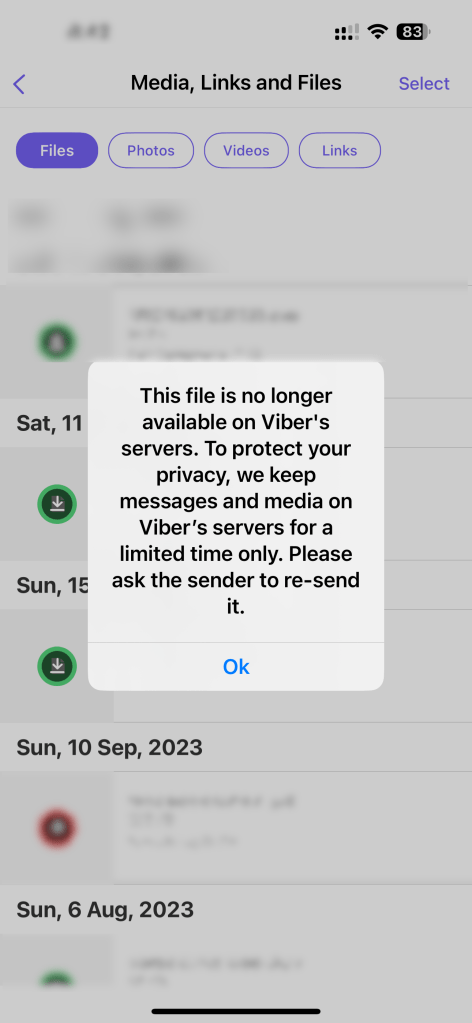
Viber doesn’t retain files and photos long-term. For a business or medical group, this is a dealbreaker. In medicine, we routinely share diagnostic images, case studies, and important documents that need to be accessible for future reference. With Viber, you can kiss those files goodbye after a certain period of time unless you manually save them elsewhere. This constant need for “housekeeping” disrupts workflow and increases the risk of losing critical information.
2. The Constant Interruptions of Ads
Viber was once considered a clean, ad-free communication tool, but that’s no longer the case. Now, the app is rife with unsolicited ads, which disrupt focus and dilute the professional nature of business conversations. Imagine discussing a patient’s case only to be interrupted by an ad for a pizza delivery service. It’s unprofessional and jarring, especially in high-stakes environments like hospitals.

3. Group Overload
It seems like every hospital, department, division, and even project has its own Viber “group.” These groups multiply like rabbits—before you know it, you’re juggling dozens of them. It’s nearly impossible to track which group is meant for what, especially when groups are bombarded with non-essential messages (more on that below). This cluttered structure makes it hard to streamline communication and know where to focus your attention at any given moment.
4. Inundation with Non-Business Messages
Congratulatory messages, birthday greetings, forwarded memes—these have their place in social chats but not in business-related discussions. Unfortunately, Viber groups often turn into dumping grounds for these messages, burying important conversations in a sea of irrelevant noise. While this issue isn’t entirely the fault of the platform, Viber offers no effective way to filter out these non-business messages. In the medical community, where time-sensitive discussions could pertain to patient care, having to sift through irrelevant content is more than just an annoyance—it’s a liability. A filtering option to separate casual chatter from critical communication would make the app far more useful for professional settings.

5. Difficult to Retrieve Important Messages
One of the biggest challenges with Viber is its lack of message-sorting capabilities. If you’re looking for a specific conversation or message thread, good luck. The search functionality is rudimentary, and there’s no way to sort messages by criteria like sender, date, or content type. In medicine, where even the smallest piece of information can be vital, this limitation is a serious flaw.
You can’t tag important messages or create custom folders for specific projects. There’s no way to prioritize urgent cases or flag critical discussions for follow-up. Pinning a message only works with one message at time. This might be fine for casual users, but for professionals managing multiple high-stakes tasks and groups of care providers with complex workflows, it’s unworkable.
6. Poor Search Functionality
In any professional setting, especially medicine, the ability to quickly find past conversations or documents is critical. Viber’s search function is frustratingly limited, making it difficult to retrieve old messages or locate key information from a chat history. Whether it’s tracking down a patient’s discussion or looking for critical instructions shared weeks ago, you’re left scrolling endlessly through threads. The inability to search effectively wastes time and increases the risk of missing out on vital details—an unacceptable risk in the medical field.
7. Image and Video Compression
Another major issue with Viber is its aggressive compression of images and videos. In the medical field, sharing high-quality images is crucial, especially when discussing diagnostic results or reviewing imaging studies with colleagues. Viber’s compression significantly reduces the quality of shared media, making it difficult or even impossible to use them for clinical purposes. Blurry or pixelated images aren’t just annoying—they can lead to misunderstandings or missed details that might be critical in a medical setting.
8. A Messy Folder Structure
For Android and Windows users, Viber’s folder structure is a complete mess. Files and media are saved in random, hard-to-locate locations, which makes it difficult to find what you need. Unlike more robust platforms that offer organized folder hierarchies or intuitive storage, Viber scatters your data across different directories, often without any logical pattern. In the medical field, where organized data is crucial for patient care and research, this disorganization can lead to wasted time and missed opportunities.
It’s time to ditch Viber.
For casual chats and social groups, Viber may still hold some appeal, but for business use—especially in a high-stakes field like medicine—it falls woefully short. From the lack of long-term file storage to the barrage of irrelevant messages and an overall disorganized system, Viber introduces more inefficiency than it’s worth.
If the Philippine medical community wants to improve communication and collaboration, it’s time to consider better alternatives. There are other messaging platforms designed for business use that offer better file management, search functions, and a more professional, ad-free environment—tools we desperately need to enhance productivity and, ultimately, improve patient care.
It’s high time we stop using Viber as a crutch and adopt a communication platform that’s built for the critical nature of our work.
Disclaimer: This blog post is intended for medical professionals and reflects the author’s personal opinions and experiences. It does not represent the views of any organization or institution.
 Dr. Mic Agbayani